
-
AbelOps AI Automation Framework
Turning Complex Business Operations Into Intelligent Workflows
Modern companies produce large volumes of business data daily. Data on booking and customer interactions, manufacturing processes, employee performances, and resource allocation, there is no shortage of information. The difficult part is turning the data into actions. There are organizations that are still using manual processes, disconnected systems, and decision-making methods that need constant human involvement.
When the number of tasks becomes more complicated, this could slow down the whole process and might be very expensive for the organization. The AbelOps AI automation framework integrates intelligence within organizational operations. It achieves this by leveraging AI, machine learning, operational analytics, and intelligent agents. In contrast to simple storage of data, this framework converts operational data into meaningful insights and actionable responses. This creates a more integrated way of working for AI workflow automation processes that know what’s going on, can react to changes, and make people work better together.
How Artificial Intelligence Powers AbelOps?
The base of AbelOps is an API-driven architecture platform that ensures secure communications between the internal systems and third-party applications. In contrast to working with separate systems, AbelOps makes use of APIs to serve as an intermediary tool that enables various technologies to communicate with each other effectively. The API system platform strategy allows companies to increase their business operations without making the technology environment chaotic. The benefits of this architectural design include:
- Ability to connect with third-party software applications easily
- Expansion potential of the platform
- Data synchronization between systems
- Workflow management in different departments
This advanced API-driven architecture platform enables AbelOps to fit in perfectly within the business environment and meet future technological demands.
Moving Beyond Rule-Based Automation
AI Agents That Support Everyday Operations
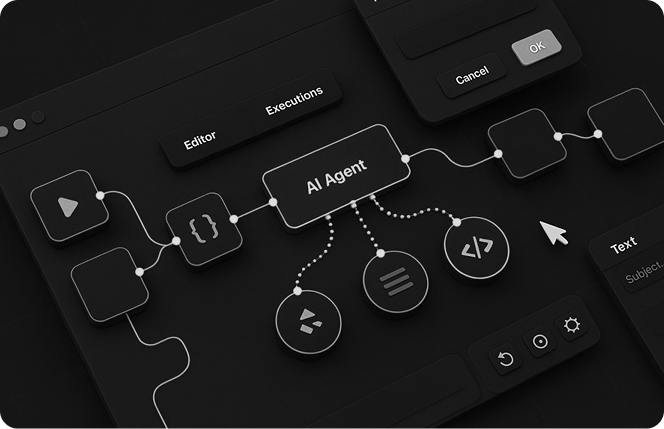
AI agents can perform operational activities that would normally need considerable human interaction. For instance, an AI agent can help make a booking, manage an operational request, coordinate a dispatch process, or communicate with customers. These agents can interface with the user and existing systems depending on the processes using API integrations, communications, databases, and workflow automation systems. This enables AI workflow automation to be used in real-life business processes rather than being used only for reporting or analytics.
Predictive Intelligence for Better Decisions
It is valuable to know what occurred. It is even more valuable to know what will happen in the future. Machine learning models could be applied to operational data by AbelOps to uncover patterns and future possibilities. For instance, AI workflow automation will assist companies to:
- Estimate transportation demands
- Project manufacturing capacity
- Pinpoint skill shortages in their employees
- Detect new operational trends
- Determine future resource needs
This allows management to have more data while making operational decisions.
Automating Workflows With Real-Time Data
Traditional automation normally requires fixed sets of rules. Although rules are important, businesses in today’s world often run in situations where conditions keep changing. The AI automation framework is capable of being more adaptive by using information about the real-time situation to decide what to do next. For instance, the transportation application can choose the driver using location, availability, and other operational parameters. The manufacturing system can schedule tasks based on available machine capacities and workloads. The intelligent automation platform can also recommend training based on the performance of the employee and the required skill gap. Through this process, organizations can streamline the process and minimize manual coordination efforts.
Turning Operational Data Into Useful Insights
Every automation workflow generates operational data. The AbelOps system can study this data to assist companies in figuring out what is working, where there are holdups, and where there are inefficiencies. Operational analytics may identify:
- KPIs
- Bottlenecks in workflow
- Resource utilization
- Capacity problems
- Performance trends
- Optimization possibilities
These data points can be provided via dashboards and analytics software that will allow managers to have a better understanding of operations daily. It is one of the key features of an intelligent automation platform since automation is only valuable if it is measurable and continuously improved.

One AI Automation Framework Across Multiple AbelOps Solutions
The AbelOps AI automation framework is built to cater to multiple industries and operational contexts by means of a common base for intelligence and automation.
Smarter Transportation With AbelDispatch
AbelDispatch has the potential to leverage AI to manage transportation tasks and minimize manual intervention. Potential uses may include:
- Driver allocation
- Optimized dispatch
- Operations management
- Client communication
- Transportation analytics
By utilizing operational data and automated decision-making processes, transportation teams can better handle intricate workflow operations.
Personalized Learning Through AbelLearn
There are difficulties created by training and workforce development as well.
The tool can make use of AI to analyze learning behavior and understand employee progress.AI workflow automation can facilitate:
- Learning progress analysis
- Skill gaps determination
- Training suggestions
- Performance analysis
- Personalized learning workflows
This enables organizations to make training decisions based on actual performance data instead of purely manual evaluation.

Moving Beyond Rule-Based Automation
Traditional automation involves following set instructions, where if certain things happen, then do something specific. This model works well in cases of predictability, which unfortunately does not exist in most present-day processes. The AbelOps AI automation framework presents a much more flexible strategy. AI solutions will be able to evaluate operational data, identify patterns, and make decisions based on these changes. In the long run, this will allow companies to:
- Avoid redundant manual actions
- Optimize resource management
- Identify operational inefficiencies
- Adapt to changing demand
- Make more effective decisions
- Manage complex processes better
That is where the importance of AI workflow automation goes beyond mere automation of tasks. It becomes a means to develop operational systems that keep learning based on data.
Technology Supporting the Intelligent Automation Platform
AbelOps uses cutting-edge AI technology alongside trusted application and infrastructure tools which are trusted.
AI and Machine Learning Technologies
The AI automation framework is compatible with technology including:
- OpenAI
- LangChain
- CrewAI
- PyTorch
- TensorFlow
Intelligent automation platforms offer features to develop AI agents, machine learning models, intelligent workflows, and decision support systems.
Data & Application Infrastructure
Another aspect that is important for operational intelligence is a robust technology stack with security and data protection. The following technologies may be used in AbelOps:
- Python
- FastAPI
- PostgreSQL
- MongoDB
- Redis
All these together facilitate data processing, application services, workflow operations, and operational activities.
Scalable Cloud Infrastructure
Scaling is critical for businesses that have expanding needs. AbelOps AI automation framework is designed with scalable cloud infrastructure and may utilize:
- Cloud Infrastructure of AWS
- Containerization through Docker
- Kubernetes Orchestration
This will provide the basis for scaling AI applications as needed by the business.
Building the Next Generation of Business Operations
With the increasing reliance of organizations on data, being able to translate data into actionable items will be an important competitive differentiator. What the future of operations will mean is not just increased automation but creating a system that will understand the context of operations, aid in decision-making, and automate actions. Operational Intelligence Platforms like AbelOps are progressing towards this goal by combining AI, automation, analytics, and operational intelligence. This approach leads to the development of a framework that enables companies to deal with complexity without becoming complex themselves.

See What AbelOps Can Automate
Discover how AbelOps combines AI, analytics, and intelligent workflows to help businesses simplify complex operations, improve efficiency, and build systems that can scale.
Frequently Asked Questions
What is car rental management software?
It is a software that aids in the management of bookings, vehicles, drivers, and communication within one application.
Can it manage both the vehicle and the driver?
Yes, it integrates fleet management and dispatch within one application.
Is it a cloud-based software?
Yes, it can be accessed from any location, and you can manage your rentals anywhere.
Are there automated bookings?
Yes, it does that through web forms, WhatsApp, and AI voice bookings.
Is it scalable?
Definitely yes; it is built for scale.