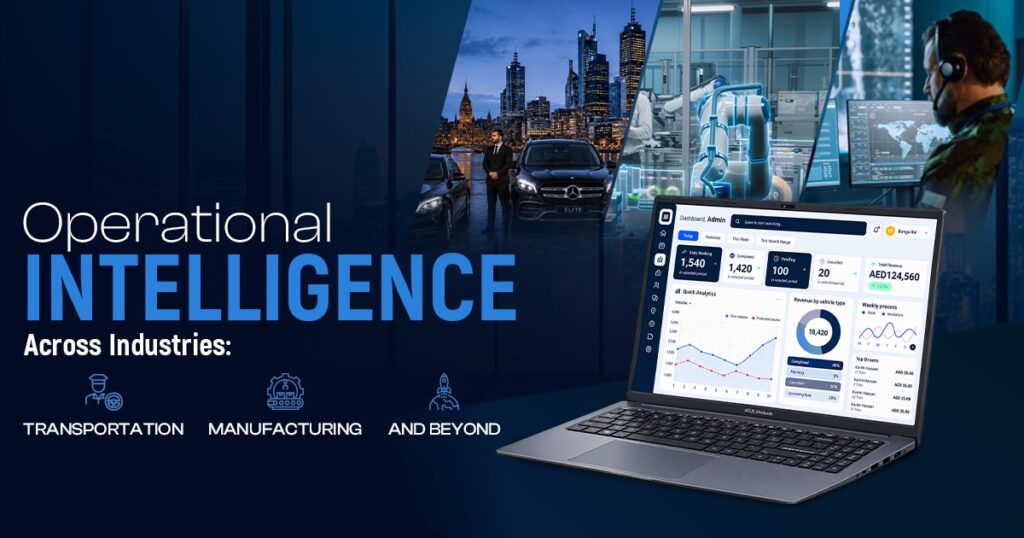
Companies usually do not find it difficult to expand because of a lack of demand. Companies find it hard to grow when their day-to-day business activities get too complicated for manual handling. Transport companies arrange bookings, drivers, vehicles, and clients, while manufacturing businesses control machinery, production planning, order processing, and quality assurance. Large organizations need to monitor staff training, certification, compliance, and performance. All types of industries are confronted with the same problem: their operations are becoming more complex than they can be visible. Operational intelligence combines workflows, information, automation, and decision-making within a single environment. Organizations do not need to use spreadsheets, e-mails, dashboards, and other separate applications to achieve better visibility.
Key Takeaway: Regardless of whether you are managing vehicles, machines, or people, lack of process integration can lead to operational blind spots. Operational intelligence provides the glue for the integration of these pieces, allowing enterprises to operate more effectively.
When Disconnected Systems Hold You Back
Companies currently use many different software tools; however, all of them function separately. One system can be used for making bookings, another for communication purposes, and performance metrics will be available in spreadsheets. This leads to manual coordination
- Scattered Information
- Slow Decision-Making
- Inefficient Use of Resources
- Low Visibility
- Operational Bottlenecks.
The addition of yet another disconnected tool is not going to help solve the problem. The organization requires an integrated view of operations that aids in detecting problems earlier on.
Why Transportation Needs More Than Booking Software
Transportation operations become more complex as fleet sizes and bookings increase. It is essential to allocate tasks to drivers, manage vehicle availability, provide updates to customers, and to manage the entire process. Companies without any system in place will have missed appointments, scheduling problems, poor use of vehicles, and poor communication. A transport dispatch system can aid in structuring the entire process of booking, driver management, dispatching, customer communication, and reporting in the workflow process. But it is not just about automation of processes; it is also about reducing manual effort.
The Same Visibility Challenge Exists Inside the Workforce
Workforce management becomes harder when processes like training, onboarding, certification, compliance, and development occur in separate systems. A manager needs a means by which they can have visibility into the training needs, expiring certifications, skill gaps, and workforce readiness. Workforce intelligence software provides an integrated platform to manage training, certification, performance, and readiness.
One Challenge that Exists in Multiple Industries
The transport operation includes driving people, trucks, orders, and customers; the manufacturing operation consists of machinery, orders, manufacturing, and supplies; the staff management operation includes staff, training, certifications, and performance. There may be differences in how the operation is organized, but the needs will be the same: need for accurate data, process integration, and visibility. With an operational intelligence platform, a company can connect processes and improve visibility beyond fragmented systems. AbelEdge extends this approach across key business functions by connecting business information, workflows, and intelligence to help organizations identify priorities and make better decisions.
Making Automation Work for Real-World Operations
Automation makes work faster; nonetheless, automation does not necessarily mean intelligent operations. Transportation needs intelligence in relation to dispatch, fleet, drivers, and bookings. Production demands intelligence on production, machines, resources, and processes. Operations involving workforces need information about training, compliance, capability of the workforce, and readiness. Information needs context..This is why AbelOps focuses on operational intelligence solutions that are specific to certain business environments. This aims to minimize operational friction, increase visibility, aid decision-making, and facilitate growth.
Scaling Without Operational Complexity
Growing businesses experience increasing demands for operations. More clients mean more booking requests, employees need more training, and increased orders mean greater coordination is needed. With the use of spreadsheets, disconnected systems, reminders, and memory, the process of business growth can soon become very costly. Operational Intelligence is all about linking the processes, information, and decisions and providing executives with more insight into their operations.There can be variations in the operations of each industry, but one thing remains constant, that is, the need for more visibility amid complexity.
Frequently Asked Questions
- What is operational intelligence?
Operational Intelligence links information, processes, automation, and decision-making in order to provide organizations with better insight into managing their operations.
- What does it entail in different industries?
The use of operational intelligence differs from one industry to another. While in transportation it may involve dispatch and fleet management, in manufacturing, it may be about production and equipment.
- What makes it different from conventional software?
Conventional software usually handles the execution of individual activities. Operational intelligence integrates such activities in order to provide a bigger picture of workflows and performance.
- Why do industry solutions matter?
- Every industry has specific characteristics and needs that must be considered when developing industry solutions.
- Can it help organizations scale?
Yes. By decreasing manual coordination and integrating operational information, operational intelligence enables organizations to deal with increasing complexity without constantly having to do more manual coordination.
Build an Operation Ready for What Comes Next
Though your specific industry may be unique, complexity is definitely not. When managing your business is becoming increasingly complicated due to your systems being disconnected, lack of coordination, and low visibility, adding another system to the mix is just going to complicate things further. What you require is an operating environment built on how your business functions. AbelOps creates Operational Intelligence solutions for businesses that are too complex for fragmented operations. Create intelligent operations now to ensure that your systems cope with future growth