
Operating a limo business is more than just picking up people and bringing them to their destinations. All rides have to be logged, properly billed, and paid for. When even the smallest details of this process fall through the cracks, money could be lost.
The issue for most operators isn’t that there aren’t enough rides coming in; it’s that rides and bills don’t line up.
How Limousine Company Revenues Leak In Silence
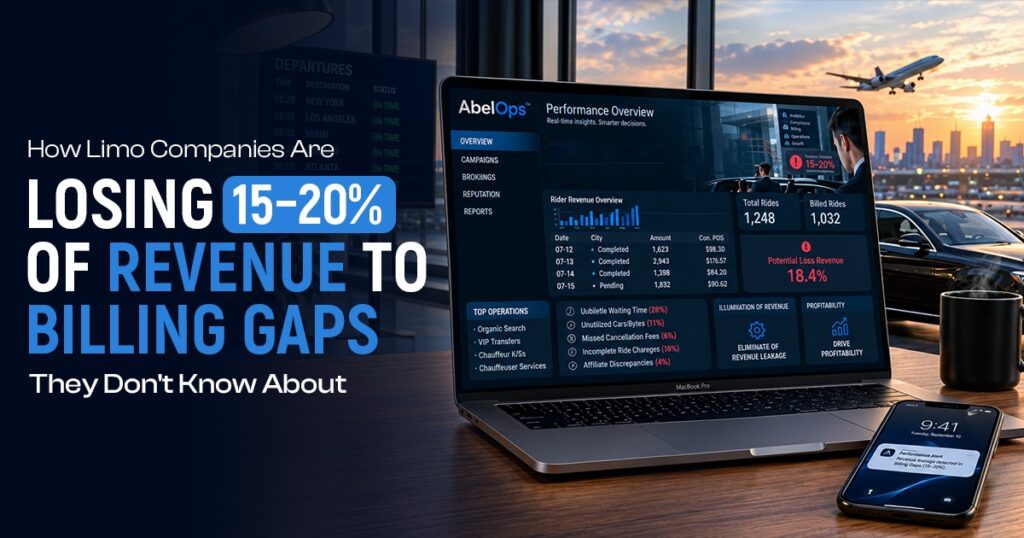
Revenues leak when a limousine company delivers services but fails to collect its full revenue. It may happen because of the extra time taken for waiting, extra stops, last-minute change requests, or cancellations. A single missed charge is probably negligible, but when you start adding up all those little charges across hundreds of rides, it can make a big difference. It’s not about getting more bookings all the time; it’s also about making sure you’re earning the money you’ve already earned.
Why Billing Gaps Are Such a Common Problem
Many limousine companies continue to use spreadsheets, emails, among others, for billing purposes. Traditional dispatch systems can handle vehicles and drivers, but not all the information regarding each ride might be passed on to the billing department.For instance, when the passenger asks for an extra stop or a driver waits for a longer period. If this information is not passed on to the billing department, then the services will be provided free of charge. With more rides, the tracking becomes even more difficult.
Five Common Sources of Lost Revenue
- Completed Rides That Aren’t Billed
An error in data entry could cause completed rides to be missed. Comparing completed rides to those that are billed would make this clear.
- Ride Changes Missing From Invoices
Any changes to the trip, including any added stops, services, and increased time, would add to the cost. Yet the lack of documentation for these changes would result in a loss for the company.
- Missed Waiting and Cancellation Fees
It is easy to miss out on charging customers waiting fees and cancellation fees manually. The entries made by the chauffeur may not make it to the billing department.
- Manual Reconciliation Errors
The dispatch, accounting, and billing departments can be kept separate from each other. In such cases, it takes much more time for staff members to reconcile data.
- Affiliate and Vendor Discrepancies
Partner bookings can also be another source of revenue gap. This is where the booking amount paid by the affiliate or vendor differs from the agreed rate.
Why More Bookings Don’t Always Mean More Profit?
A higher number of bookings will not mean higher profits, particularly if there are gaps in the billing. If you do not bill for the waiting time, for cancellations, or changes in trips, you will work even harder but will not see any increase in profits. A more sensible strategy would be to increase the number of bookings and ensure that every completed trip is billed properly.
Numbers Every Limo Operator Should Watch
There is no need for many complicated reports in order to identify any billing problems. The following indicators might be helpful for you:
- Completed rides vs. Billed rides
- Revenue per ride
- Waiting time revenue
- Cancellations revenue
- Revenue from services
- Fleet utilization
- Payouts to affiliates/vendors
It will be quite good if your completed rides are always larger than billed rides.
How Better Dispatch Technology Can Help?
Modern limo dispatch software links up reservation, dispatching, driver operations, modifications to the journey, and billing processes within a single workflow management system, keeping all details of each ride organized throughout the process. An automated dispatch system will eliminate repetitive administrative work and improve the accuracy of the process while giving management a better understanding of each trip that has been made. The point is not to replace your personnel but rather to ensure that they have all the correct information.
A Simple Revenue Audit
Look through recent completed trips to see how well they stack up against the corresponding invoice forms. Make sure that:
- The proper amount was charged.
- Extra stops were included.
- Waiting time was billed.
- Cancellation fees were levied.
- Affiliate/vendor payments matched up.
It’s easy to spot small problems by performing audits regularly.
Turn Lost Revenue Into Better Control
Revenue can also be lost due to mistakes that occur on several rides. Matching the dispatch data with billing data and measuring the metrics would help avoid this loss.
Profit maximization in the limousine business does not have to do with having more clients. Profit optimization could simply mean ensuring that all rides are billed correctly.
Frequently Asked Questions
- How do limo companies miss out on revenue?
They can miss revenue from no-shows, unbilled waiting time, cancellation penalties, wrong rates, ride modifications, and vendor problems.
- What is revenue leakage in the transportation industry?
Revenue leakage is the money that a company makes but does not receive because of billing inaccuracies and mistakes.
- Is dispatching technology capable of minimizing billing discrepancies?
Yes, it can, since it connects dispatching and billing applications.
- What should be tracked by a limousine company?
Rides completed against rides billed, income per ride, waiting fees, service fees, and payments to partners.
- Is 15-20% lost revenue expected?
Not exactly. This is dependent on the company. The critical aspect here is identifying lost revenue.