
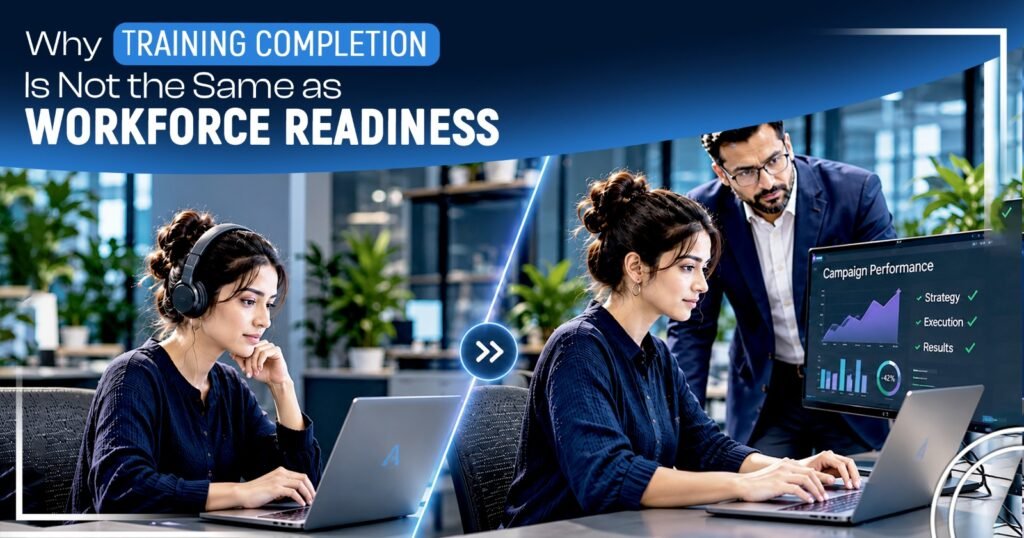
Finishing a course does not necessarily mean that an employee can confidently perform the required tasks. Completing assessments may not be enough for employees to understand how to utilise their new skills. Workforce readiness allows employees to use their skills, manage their responsibilities, and meet expectations of the role. By looking at employee training outside of their training history, managers can identify gaps in their skills and make better decisions on how to develop them.
Training Completion Doesn’t Guarantee Job Skills
Completion rates only tell you how many employees have completed training. They don’t provide any insight into how well they can apply the knowledge.
For example, if an employee may have passed a customer service test but is still struggling with dealing with a difficult customer because there wasn’t enough practice, processes weren’t clear, or they were not familiar with the environment. If you are using completion rates as an indicator of capability, then these gaps may be missed.
What to Check After Employees Complete Training?
Managers should also pay attention to the performance of their employees after training:
- Ability to do Practical Tasks
Ask employees to show you what they have learnt by completing practical tasks. This will give you an idea of their ability to carry out the duties expected of them.
- Accuracy and Consistency
How consistent are staff at completing tasks correctly? How often do mistakes occur, and how often do you have to correct them?
- Confidence to Work Independently
How much support do they require after training? If they frequently need support from their supervisors, they may need further practice, clearer instructions, or more support.
- Knowledge Retention
Employees should be able to retain the key knowledge acquired during training. Post-training tests and practical assessments can be used by a manager to determine if this is taking place.
- Time to Competency
The amount of time it takes the employee to become competent can be useful to determine any issues with training methods, management or role expectations.
Turn Training Into Practical Skills
Ensure that you have clear learning goals so that your managers can provide them with the right training. Provide them with practical experience and testing. If there are any common mistakes, then this can be overcome by making sure you are giving them clear instructions and the right tools. This will improve training and improve employee performance.
Connect Employee Development With Business Needs
Provide training to support the practical tasks your employees perform. Ensure you are aware of areas they lack skills in, changing job requirements and provide training to meet those needs. A good workforce development strategy will help your employees develop practical skills to improve their performance. Regularly review your employees’ skills, training requirements and areas where further guidance may be needed.
How AbelLearn Supports Workforce Development?
Managing employee learning becomes more challenging as teams grow. Businesses need a clear approach to organising knowledge, supporting development and understanding workforce capabilities. AbelLearn, AbelOps’s workforce learning and intelligence platform, is designed to support organisational learning, workforce development and knowledge management. Its role within a broader workforce strategy is to help businesses organise learning and knowledge processes. Managers should also establish how practical skills will be assessed and how employees are expected to apply what they learn.
Make Employee Assessments Fair and Consistent
Ensure your employees know what is expected of them. Explain the standards that they are meant to meet, how they will be measured and what help they can get.
Considerations around the role of the job and previous experiences should be included when assessing employees. Different roles will have different expectations.
Real life examples, feedback from supervisors, and evidence from tasks carried out can be useful in determining employees capabilities.
Improve Training When Skill Gaps Appear
Sometimes it is not simply a case of providing additional training when employees are struggling following training. It is important to understand why the employee is struggling. There might be a need for extra practice, clear instructions, good tools or experienced support. Determining whether there is an issue will help them avoid providing training that isn’t addressing the issue.
Frequently Asked Questions
- Does completing training mean that employees are ready for the role?
No. They will have undertaken the training but must be able to do the job by having practical skills, remembering information, and completing tasks.
- How can managers measure how effective training has been?
Managers can monitor practical skills, accuracy of tasks, errors made, working alone, and how quickly they become competent.
- What is Workforce Readiness?
Workforce readiness to work is an indication of whether they have the knowledge, skills and capability to do their role.
- Why is time to competency important?
This will give you an indication of how long it takes your employees to reach the required standard of performance and will indicate if any training or supervision improvements need to be made.
- How can businesses link training to their everyday work?
Identify specific skills required by individual roles and provide suitable training to measure and improve real-world ability using feedback.