
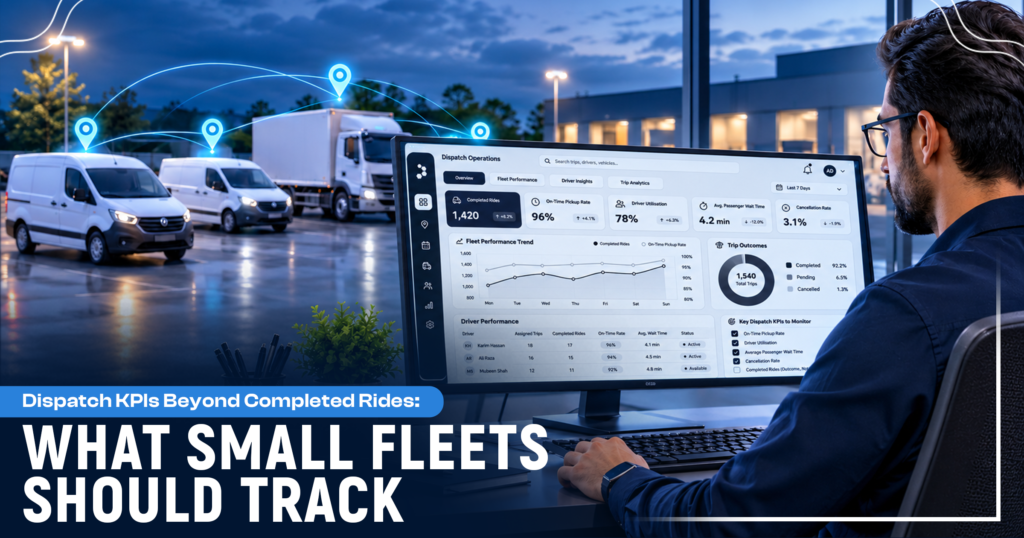
More completed rides can be seen as a positive thing for any transport company however it doesn’t necessarily mean that your dispatchers are doing a good job. There could be issues with late assignments, continual cancellations and manual updates causing problems. For small fleets it’s important to look at Dispatch KPIs to see how well your bookings are being managed and whether there are delays.
Why Completed Rides Are Not Enough?
While it can tell you how many rides have been completed by your fleet, it won’t give any insight into how efficiently they have been managed. You may have two fleets completing 100 rides in a week but one is well-managed with few issues while the other is having problems with late assignments. By looking at further dispatch KPIs you can help managers understand the differences between the two fleets and make better decisions.
Six Dispatch KPIs Every Small Fleet Should Track
- Booking Assignment Time
This KPI will show the amount of time it takes to assign a driver to a booking.
Assignment time = Driver assignment timestamp − eligible booking timestamp
If your assignment times are long it may show that drivers are not available, double booked or there is a problem with your dispatch. By looking at assignment times on a daily, and area basis you can see if anything is causing issues.
- Driver Acceptance Rate
Not all drivers will accept assignments, this KPI shows how often drivers accept assignments.
Acceptance rate = Accepted assignment offers ÷ Total valid assignment offers × 100
If your acceptance rate is low it may be due to drivers not being assigned suitable jobs, drivers not being available or lack of booking information. This should be investigated by management to see why drivers are not accepting.
- Booking Cancellation Rate
This affects income, driver availability and customer confidence.
Cancellation rate = Cancelled confirmed bookings ÷ Total confirmed bookings × 100
By monitoring this we can understand common reasons for cancellation, such as customers changing their booking, times clashing, last minute bookings and vehicle unavailability. This means we can easily find ways to improve these issues which are within our control.
- On-Time Pickup Rate
Not every completed ride will be a good experience for your customers. If rides are not picked up on time this can affect customer satisfaction. The formula below will help you calculate On-Time Pickup Rate.
On-time pickup rate = Pickups within the agreed time window ÷ Total pickups due × 100
Your fleet managers should identify what they consider an acceptable time window for pickups. This should be applied consistently. It may also be useful to look at the causes of delays by route, time of day or service type to identify issues with scheduling.
- Booking Completion Rate
This KPI indicates how efficiently a fleet is providing services for accepted bookings.
Completion rate = Completed eligible bookings ÷ Total eligible bookings × 100
Only include bookings that were required within the report period. When looking at your Completion Rates in relation to your Cancellations and Operational Exceptions you can get a better understanding of how well you are delivering services.
- Revenue by Ride Type and Driver Performance
Overall revenue may not always indicate the most active services. By splitting revenue into different types of rides, managers can easily see how different service types are performing. Looking into the revenue and comparing it to driver and fleet performance can show the variety of work between services. Higher revenues do not always mean higher profits. Costs, distance travelled and vehicle needs should be taken into account.
How to Make Dispatch KPIs Useful?
Tracking numbers are only useful if they help you make better decisions. Smaller operators will want some simple insights rather than complex reports. Look at how long it’s taking you to assign jobs, to see where you’re causing delays. Look at your acceptance rate to see how drivers are reacting. Understand why rides are being cancelled and look at your pickup figures to find out why customers are complaining. Compare your revenue by ride type. Use consistent definitions, review results regularly, and investigate unusual changes before taking action. For more insight, read AbelDispatch vs. Traditional Dispatch for Fleet Operators.
How AbelDispatch Helps Small Fleets Monitor Performance?
Managing bookings, drivers, ride tracking and reporting across multiple platforms can be difficult to keep on top of. AbelDispatch is a platform designed to help transportation businesses manage bookings, driver management, ride tracking, customer alerts and reporting. Its reporting functionality includes comparing revenues, driver and fleet performance, ride type performance, driver acceptance rates and dispatch efficiency. The reports will depend on how you have set up your system and what information has been captured. Some reports will require further calculations. Having information captured in an organised way makes it easier for managers to understand what is happening day-to-day, spot any regular problems and make more informed decisions.
Frequently Asked Questions
- What are the key delivery KPI’s for small fleets?
Time to assign, acceptance rate, cancellation rate, on time pickup rates
- How many delivery KPIs should I have?
Get started by tracking 4-6 KPI’s that will help you overcome your key issues.
- How frequently should KPI’s be reviewed?
Daily to quickly spot any issues, Weekly and Monthly to identify trends.
- Why is driver acceptance important?
This will tell you how many of your drivers are taking up assignments.Can highlight any driver availability and scheduling issues
- Can you use a dispatching system to track your fleet?
Yes. When using dispatch software you can book, assign drivers, monitor the rides and view performance reports.
Keeping Fleet Operations on the Right Track
Once trips are completed, you can measure performance. Using dispatch KPIs to track the time to assign, number accepted, cancelled, picked up and revenue will help small fleets to identify problems, make better decisions and manage day-to-day operations.